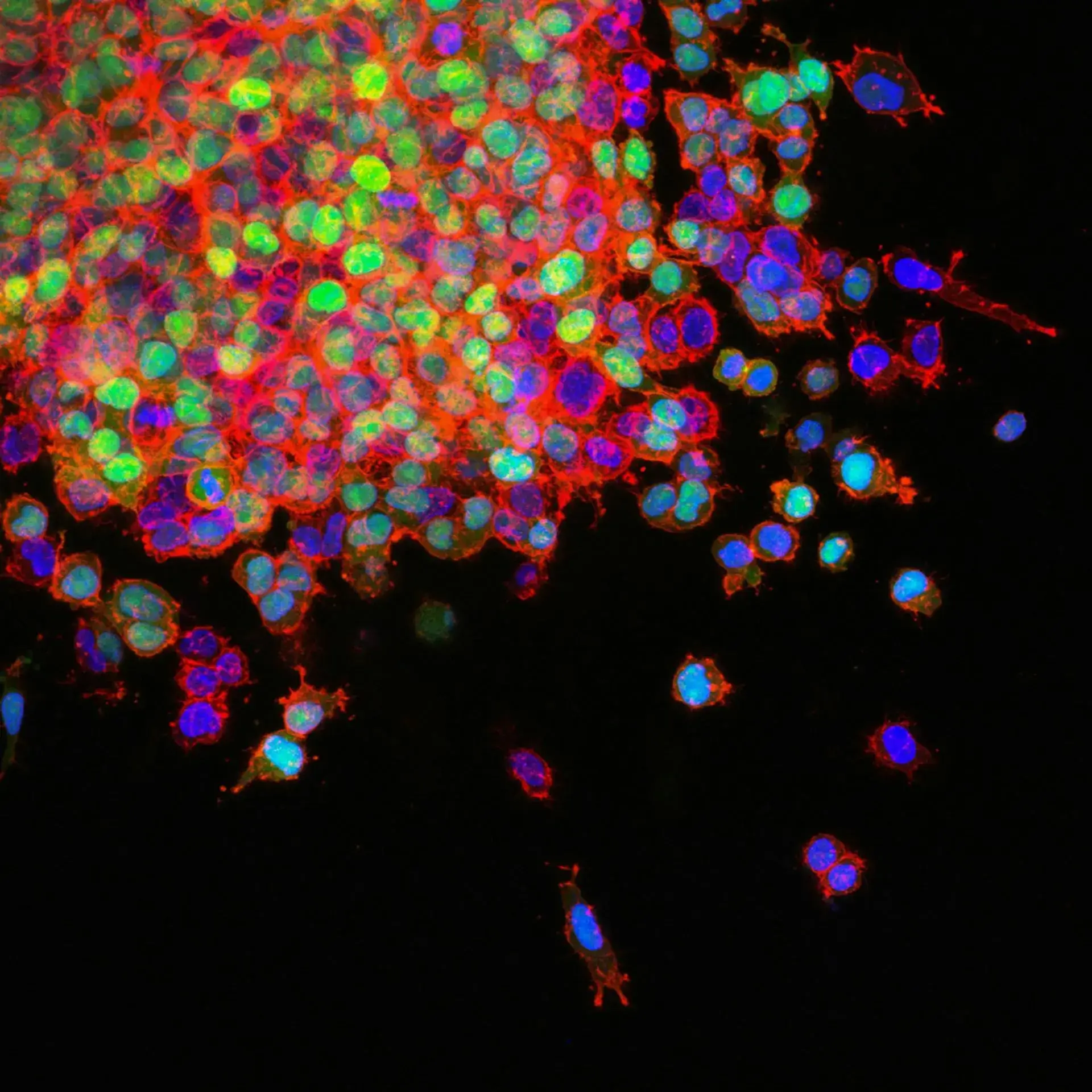
Organ-site efficacy
Evaluate treatment response in anatomically matched tumor settings using project-specific intervention schedules.

Documented orthotopic platforms include human xenograft and syngeneic tumor models across hematologic, lung, pancreatic, liver, brain, colorectal, and breast cancer settings.
Tumor line, implantation site, imaging strategy, host background, treatment schedule, and tissue outputs are confirmed per program.
Orthotopic tumor studies place the model in a disease-relevant anatomical site and can incorporate luciferase-enabled lines, imaging, tissue collection, and project-specific pharmacology endpoints where appropriate.
Evaluate treatment response in anatomically matched tumor settings using project-specific intervention schedules.
Luciferase-enabled tumor lines can support longitudinal imaging where documented and appropriate to the model.
Collect primary tumor and other protocol-defined tissues for pathology, biomarkers, or downstream molecular analysis.
Combine systemic or tissue exposure with pharmacodynamic and efficacy readouts when required.
Endpoints are finalized with the selected model, species or strain, treatment design, and partner laboratory before study placement.
Protocol-defined measurements of tumor burden or treatment response.
Longitudinal in vivo imaging for compatible luciferase-enabled models.
Histology, IHC, molecular, or other downstream analysis on collected tissues.
Plasma, tumor, or selected tissue exposure when incorporated into the study.
Exact tumor line, host strain, implantation technique, imaging workflow, endpoints, and timeline are confirmed during technical review.
Share the compound, mechanism, development question, preferred model, and intended endpoints. We can review fit, feasibility, and the appropriate partner-laboratory route for a Orthotopic study.Required fields are marked with an asterisk(*).