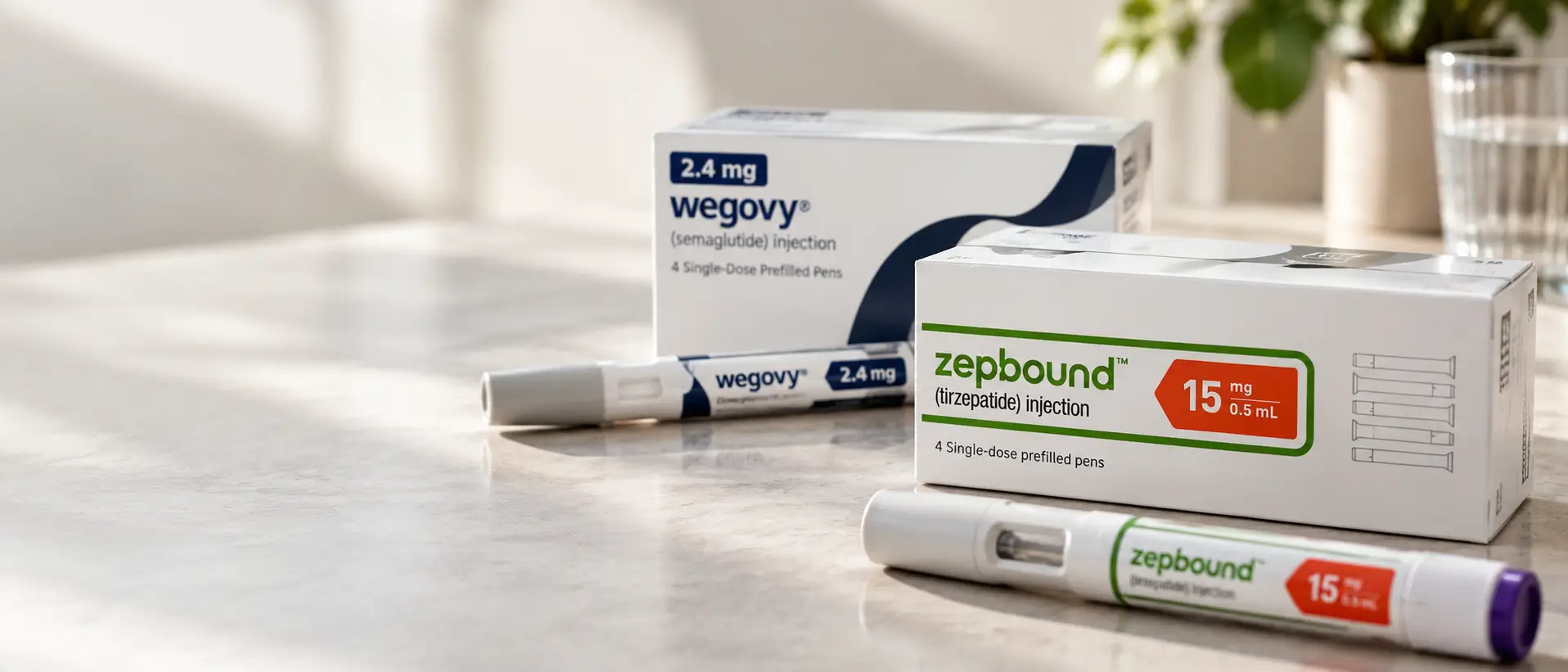
For years, GLP-1 drug development centered on peptides. Researchers worked to extend their activity, while manufacturers developed the processes and formulations needed to produce and deliver them. That approach has led to important therapies. The approval of a nonpeptide GLP-1 medicine in 2026 opened another route to the same receptor, along with a different set of questions for drug discovery and manufacturing.
The US FDA approved orforglipron on 1 April 2026. The approval followed that of oral semaglutide tablets for weight management in December 2025. Orforglipron is a nonpeptide small molecule; oral semaglutide is a peptide. That difference affects how each medicine is discovered, tested, made and sourced.
One receptor, different development routes
For developers, molecular structure shapes the work behind a tablet. Oral semaglutide remains a peptide, with the manufacturing and formulation demands that follow. Nonpeptide agonists are discovered and optimized in a different chemical space, where metabolism, selectivity, solubility and impurities present different challenges.
Three GLP-1 architectures bring distinct development needs.
Compare discovery, testing and manufacturing tasks for injectable peptides, oral peptides and oral nonpeptide small molecules.
| Decision dimension | Injectable peptideSemaglutide injection | Oral peptideSemaglutide tablet | Oral nonpeptideOrforglipron |
|---|---|---|---|
| Molecule & deliveryMolecular modality | Modified GLP-1 peptide | GLP-1 peptide | Small-molecule receptor agonist |
| Delivery problem | Duration of exposure and injection interval | Gastrointestinal uptake and formulation | Absorption, first-pass metabolism and daily coverage |
| Discovery & testingDiscovery focus | Sequence engineering and peptide modification | Peptide design plus formulation | SAR, binding mode, signaling and selectivity |
| Translational evidence | Receptor activity, PK/PD and immunogenicity | Peptide exposure, food/dosing conditions and PK | Species pharmacology, ADME, metabolites and PK/PD |
| Process & supplyManufacturing route | Peptide synthesis or expression, modification and sterile formulation | Peptide process plus enabling oral dosage formulation | Multi-step organic synthesis, isolation and oral formulation |
| Scale-up questions | Sequence-related impurities and conjugation control | Peptide quality and delivery-system consistency | Isomer/impurity fate, robust intermediates and reproducible route |
Sources: FDA semaglutide tablet and orforglipron approvals (2025–2026); Zhao et al., Nature (2020); Sloop et al., Science Translational Medicine (2024). DempoChem editorial synthesis; constraints vary by molecule and formulation.
For a once-daily treatment, developers need an exposure profile that supports the dosing interval, practical dose escalation and an acceptable safety margin. Measuring food effects for the individual product helps define how patients should take it.
These routes require different processes and supplier capabilities. Developers can assess manufacturing options against each product's synthesis, purification and formulation needs. For the nonpeptide route, the discovery work began with understanding how a small molecule could activate GLP-1R.
How the nonpeptide approach became possible
GLP-1R is a class B G protein-coupled receptor with a substantial peptide-binding interface. In a 2020 cryo-EM study, Zhao and colleagues resolved the receptor in an active state with the nonpeptide agonist TT-OAD2. The structure showed that a chemically different ligand could activate GLP-1R, providing a basis for further small-molecule research.
Researchers then needed to understand the response produced by such ligands. In a 2024 Science Translational Medicine study, Sloop and colleagues reported high-affinity binding of orforglipron to human GLP-1R (Ki about 1 nM), low intrinsic efficacy in selected signaling assays and negligible β-arrestin recruitment. In mice expressing human GLP-1R, relatively low predicted receptor occupancy could nevertheless produce a substantial glucose-lowering response. These findings helped connect binding and signaling with the response observed in that experimental model.
The task for medicinal chemists is to identify a nonpeptide ligand that activates the receptor at an exposure patients can tolerate.
Selecting a ligand brings receptor potency together with other molecular properties. Chemical changes that improve one property may reduce solubility, permeability or metabolic stability, or introduce safety liabilities. Researchers therefore have to examine binding, signaling and duration of action together. Signaling studies characterize features such as G protein bias; clinical studies assess how patients tolerate the resulting medicine.
The animal model can change what an experiment tells us.
Species differences make the choice of experimental model especially important. Some nonpeptide agonists, including orforglipron, activate human GLP-1R but show limited activity at the unmodified rodent receptor. Researchers have therefore used humanized-receptor models in mechanistic work, including a 2026 mouse-neurocircuit study. A weak result in a conventional mouse may reflect the model rather than the compound. Receptor pharmacology, species and exposure all need to match the question being tested.
The material used in those experiments matters as well. When researchers prepare and compare analogues, they need verified chemical identity and stereochemistry to relate a measured response to the intended structural change. Binding, cAMP, β-arrestin and selectivity data can then help them decide which compounds merit further study. These experiments guide candidate selection ahead of clinical evaluation.
What clinical studies have shown
Clinical trials bring efficacy and tolerability into the same assessment. The phase 3 ATTAIN-1 trial randomized 3,127 adults with obesity and without diabetes to once-daily orforglipron or placebo alongside lifestyle intervention. At week 72, mean body-weight reductions were 7.5%, 8.4% and 11.2% in the 6-, 12- and 36-mg groups, compared with 2.1% for placebo under the treatment-regimen estimand. Gastrointestinal adverse events were common, and discontinuations due to adverse events were higher with active treatment. Together, the weight-loss and discontinuation results help characterize the treatment experience.
ATTAIN-1 reported weight reduction and tolerability across three orforglipron doses
ATTAIN-1 at week 72 (N=3,127). Compare mean weight reductions under two estimands, the distribution of weight loss and selected adverse-event rates for each randomized group.
Two estimands, one randomized trial
Week 72 · paired point display · reductions shown as positive magnitudes
Each pair shows how the mean estimate changes under two approaches to events such as treatment interruption.
View exact values and treatment-regimen 95% confidence intervals
| Arm | Efficacy estimand | Treatment-regimen | Treatment-regimen 95% CI |
|---|---|---|---|
| Placebo | 0.9% | 2.1% | 1.4–2.8% |
| 6 mg | 7.8% | 7.5% | 6.8–8.2% |
| 12 mg | 9.3% | 8.4% | 7.7–9.1% |
| 36 mg | 12.4% | 11.2% | 10.4–12.0% |
Weight-loss response distribution
Mutually exclusive bands · treatment-regimen estimand · week 72
Bands are calculated by subtracting cumulative response thresholds. Details of the 6-mg ≥20% analysis appear in the study notes.
Selected tolerability measures
Share of randomized participants reporting an event (%)
| Arm | Nausea | Vomiting | AE stop |
|---|---|---|---|
| Placebo | 10.4% | 3.5% | 2.7% |
| 6 mg | 28.9% | 13.0% | 5.3% |
| 12 mg | 35.9% | 21.4% | 7.9% |
| 36 mg | 33.7% | 24.0% | 10.3% |
AE stop = discontinuation due to an adverse event. Each cell shows the share of its group reporting the selected event.
Study notes: Estimands handle intercurrent events differently; their numerical gap cannot isolate the effect of discontinuation. Efficacy and safety panels summarize groups, with patient-level relationships requiring individual data. The 6-mg ≥20% test was not controlled for family-wise type I error. Safety rows cover selected events.
Exhibit 2 shows two ways the trial analyzed weight loss. For the 36-mg group, the placebo-adjusted mean reduction was 11.5 percentage points using the efficacy estimand and 9.1 points using the treatment-regimen estimand. The estimands handle events such as treatment interruption differently. Reading them alongside response thresholds and adverse-event rates helps the team assess dose options.
Evidence is also emerging from other programs. In separate randomized phase 2 trials published in 2026, aleniglipron, HRS-7535 and VCT220 each produced weight reductions beyond placebo. These findings extend the clinical evidence across several nonpeptide programs. Longer follow-up will help characterize the durability of benefit and safety.
Four oral nonpeptide GLP-1 trials span 16 to 72 weeks of follow-up
Four selected peer-reviewed randomized obesity trials available by 21 October 2026. Read follow-up, enrollment, analysis method and population alongside each trial's reported outcome.
| Program / cited study | Follow-up at primary endpoint 0244872 wk | Randomized N | Analysis approach | Population and dosing |
|---|---|---|---|---|
| OrforglipronPhase IIIUS approved | 72 wk | 3,127 | Treatment-regimen estimand shown; efficacy estimand also reported | Global obesity/overweight population without diabetes; stepwise escalation |
| AleniglipronPhase IIb | 36 wk | 230 | Efficacy estimand; placebo-adjusted LS means reported | ACCESS, US sites; obesity/overweight; escalation every four weeks |
| HRS-7535Phase II | 26 wk | 235 | Least-squares mean changes | China; obesity without diabetes; multiple target doses |
| VCT220Phase II | 16 wk | 250 | Least-squares mean changes | China; obesity/overweight; fast and slow titration regimens |
Follow-up spans 16–72 weeks, with 230–3,127 participants per study. Read each reported outcome alongside its population, analysis method and titration schedule.
View each study's result and study context
| Candidate / modality | Stage & source | Within-trial reported finding | Study context |
|---|---|---|---|
| Orforglipron · nonpeptide | FDA-approved; phase 3 peer-reviewed | 72 weeks: −11.2% (36 mg) vs −2.1% placebo | ATTAIN-1; treatment-regimen estimand; N=3,127 |
| Aleniglipron · nonpeptide | Phase 2b; peer-reviewed | 36 weeks: −12.1% (120 mg) vs −0.8% placebo | Efficacy estimand; N=230; placebo-adjusted −11.3 pp |
| HRS-7535 · nonpeptide | Phase 2; peer-reviewed | 26 weeks: −9.36% (180 mg) vs −2.50% placebo | Least-squares means; N=235; Chinese sites |
| VCT220 · nonpeptide | Phase 2; peer-reviewed | 16 weeks: −9.73% (160 mg fast titration) vs −1.61% placebo | Least-squares means; N=250; titration differs |
Study notes: Differences in follow-up, populations, dosing and estimands mean efficacy comparisons remain within each randomized trial. Phase labels describe the cited study; the approval label records orforglipron's US regulatory status.
Exhibit 3 puts those studies in context by aligning follow-up, participant numbers, analysis methods and dose-escalation schedules. The accompanying table gives each trial's results alongside its study conditions.
Read dose-group estimates alongside their confidence intervals.
In the HRS-7535 trial, the 60-mg group had a numerically larger mean weight reduction than the 120-mg group at week 26, while the 180-mg group had the largest reported reduction. The published 95% confidence intervals show the uncertainty around each estimate. Dose selection brings these results together with exposure and tolerability data.
Figure 4
HRS-7535 phase 2 reported its largest mean weight reduction in the 180-mg group
26-week estimated mean weight-loss magnitudes and published 95% confidence intervals in one 235-participant phase 2 study (five randomized arms). Placebo shown in neutral gray.
Mean body-weight reduction · Unit: %
Source: Gu et al., Nature Communications (2026)
The studies discussed here are completed, peer-reviewed randomized trials. Their methods and safety reporting give developers a basis for examining how each efficacy result was obtained and which questions to investigate next.
Safety questions differ by compound
Oral nonpeptide medicines must manage adverse effects already familiar in GLP-1 treatment, including nausea and vomiting that can complicate dose escalation or lead patients to stop treatment. Each chemical series may also pose its own questions about metabolites, transport, drug interactions and organ-specific safety. Those risks need to be examined alongside the evidence of efficacy.
For orforglipron, the FDA announcement identifies precautions involving severe gastrointestinal reactions, pancreatitis, gallbladder disease and a boxed warning on thyroid C-cell tumors. The prescribing information also describes CYP3A4 metabolism and the food-effect profile evaluated in studies. These records help teams plan safety evaluation and assess potential drug interactions.
Pfizer's experience shows why safety must be assessed for each compound. The company ended its danuglipron program in April 2025 after one asymptomatic case of potential drug-induced liver injury during dose optimization; the issue resolved after treatment stopped. Pfizer's company disclosure identifies a compound-specific issue that shaped its development decision. For teams evaluating another series, metabolite and hepatic-safety work remain part of candidate assessment.
These uncertainties affect the order in which development work is done. Medicinal chemistry teams need to investigate metabolites and drug disposition and consider hepatic liabilities before committing to a promising series. CROs need models that respond to the compound under study. Process teams must identify and control impurities so that results can be interpreted against the material actually administered. Working through these questions together makes the evidence easier to interpret as a program advances.
Making the chemistry reproducible at scale
The molecular differences also shape supply requirements. Nonpeptide GLP-1 programs may call for heterocyclic synthesis, chiral building blocks, analogue preparation, route scouting and impurity control. Established peptide treatments still require peptide-manufacturing capabilities. Route complexity, purification and material specifications shape the production economics of each product.
Those requirements change with scale. Early research needs enough correctly identified material to evaluate a lead. At gram scale, teams must pay closer attention to isomers, purification losses, residual solvents and whether key fragments can be obtained again. Larger campaigns bring starting-material strategy, impurity fate, throughput, crystallization and batch consistency into focus. Route selection should weigh step count alongside control of critical reactions and isolations.
Before larger campaigns, sponsors and sourcing teams can review the consistency of supply, material specifications and fit with a reproducible API route. That review connects early material access with the requirements of the next development stage.
Material records matter in preclinical work too. Teams should document chemical identity and batch quality, including relevant impurities, alongside receptor experiments and exposure studies. If results vary between batches, those records help researchers assess whether the difference arises from pharmacology, material quality or another part of the experiment. They also make it easier to decide what needs to be tested next.
Sources & methodology
- Approach
- Editorial review of FDA approval and label materials, original structural and pharmacology research, peer-reviewed randomized trials and company disclosures available through 21 October 2026. Outcomes retain their within-trial comparisons. The platform matrix is qualitative synthesis. The ATTAIN-1 exhibit combines peer-reviewed efficacy estimates with sponsor-disclosed safety rates from the same trial; responder bands are calculated from published cumulative thresholds. The trial-design table aligns phase, follow-up, enrollment and analysis methods.
- Definitions
- Nonpeptide describes molecular structure; oral semaglutide is a peptide. Charts show weight reductions as positive magnitudes. ATTAIN-1 pairs efficacy and treatment-regimen estimands at week 72; HRS-7535 reports least-squares mean changes at week 26. Placebo-adjusted values subtract the corresponding placebo estimate. Confidence intervals describe uncertainty around arm estimates. AE stop means discontinuation due to an adverse event. The trial-design table lists randomized enrollment numerically.
- Limitations
- Clinical populations, estimands, follow-up and titration differ across trials, so efficacy comparisons remain within each randomized study. Long-term outcomes and rare adverse events require further follow-up. ATTAIN-1 safety percentages come from Lilly's detailed disclosure; the heatmap displays group-level event incidence. Responder bands are calculated from cumulative thresholds. Differences between estimands reflect their handling of intercurrent events and cannot isolate the effect of discontinuation. Pfizer's danuglipron account is a company disclosure. Species-specific receptor activity guides interpretation of preclinical models.
- FDA Approves First New Molecular Entity Under National Priority Voucher Program
U.S. FDA · 1 April 2026
- Wegovy (semaglutide) tablets: FDA approval letter, NDA 218316
U.S. FDA · December 2025
- ATTAIN-1: detailed efficacy, adverse-event frequencies and discontinuation rates
Eli Lilly (sponsor trial disclosure; supplemental to peer-reviewed publication) · 2025
- Foundayo (orforglipron) prescribing information
U.S. FDA · 2026
- Orforglipron, an Oral Small-Molecule GLP-1 Receptor Agonist for Obesity Treatment
New England Journal of Medicine · September 2025
- Activation of the GLP-1 receptor by a non-peptidic agonist
Nature · 2020
- The pharmacological basis for nonpeptide agonism of the GLP-1 receptor by orforglipron
Science Translational Medicine · December 2024
- Oral small molecule GLP-1 receptor agonist aleniglipron in people with overweight or obesity: a phase 2b trial
Nature Medicine · June 2026
- HRS-7535, an oral small-molecule GLP-1 receptor agonist, in Chinese adults with obesity: a phase 2 trial
Nature Communications · June 2026
- Oral nonpeptide GLP-1 receptor agonist VCT220 for obesity treatment: a phase II trial
Signal Transduction and Targeted Therapy · August 2026
- Pfizer Provides Update on Oral GLP-1 Receptor Agonist Danuglipron
Pfizer (company disclosure; not a peer-reviewed trial report) · April 2025
- A brain reward circuit inhibited by next-generation weight-loss drugs in mice
Nature (preclinical study) · 2026