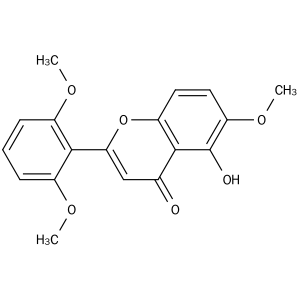
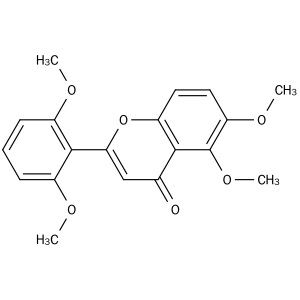
Zapotinin is a naturally occurring polymethoxyflavone isolated from Casimiroa edulis. Structurally, it differs from its analog, zapotin, by possessing a free hydroxyl group at the C-5 position instead of a methoxy group. This functional variation alters the molecule's lipophilicity and potential receptor-binding affinity. While its pharmacological profile is less extensively documented than zapotin, preliminary in vitro data indicate comparable baseline bioactivity, including antioxidant and potential antineoplastic effects. Consequently, zapotinin serves as a valuable structural model for structure-activity relationship (SAR) studies in targeted drug discovery.