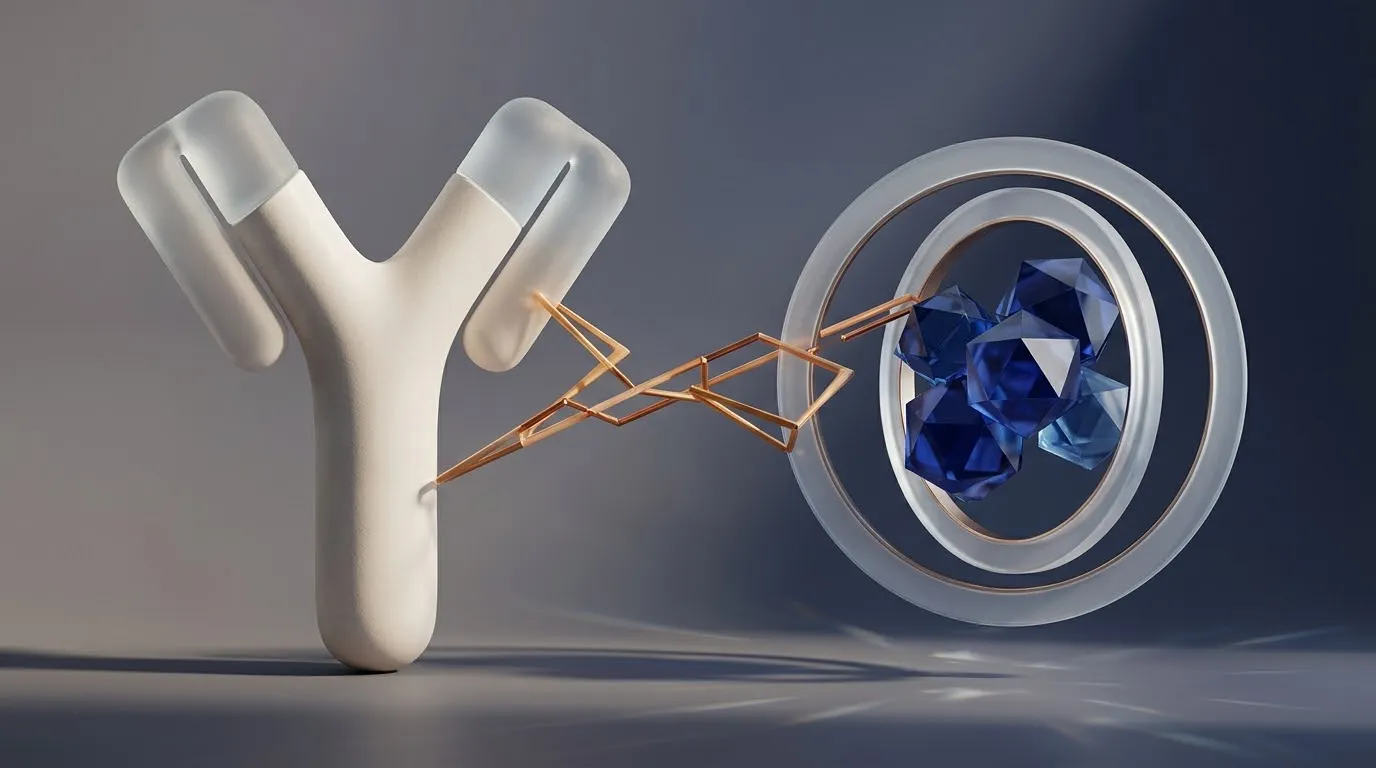
Antibody-drug conjugates (ADCs) are often discussed as a biologics capacity story, yet the sharpest scheduling friction sits in small-molecule chemistry. Across the 15 distinct ADCs licensed by the FDA through October 2026—and 21 across the FDA, EMA, and China’s NMPA—sponsors have moved rapidly from standardized tubulin inhibitors toward proprietary linker-payload constructs that demand custom synthesis and sub-microgram containment.
Monoclonal antibody manufacturing can draw on decades of global mammalian bioreactor build-out. Linker-payload synthesis cannot. Producing a cytotoxic payload, attaching a cleavable linker, purifying structurally close impurities, and transferring that intermediate into a segregated bioconjugation suite forces programs across three separate regulatory regimes—small-molecule HPAPI, biologics, and sterile drug product—before a single clinical batch is released.
Approved ADCs have converged on cleavable linkers while diversifying payloads.
Regulatory registries clarify how quickly ADC chemistry has evolved. In its October 2026 Purple Book audit, ProteinIQ verified 15 distinct chemically conjugated ADCs approved by the FDA—all holding active licenses following the re-approval of Blenrep in October 2025 and the May 2026 FDA approval of pivekimab sunirine (Decnupaz), an indolinobenzodiazepine (IGN) pseudodimer conjugate for blastic plasmacytoid dendritic cell neoplasm. Including six ADCs approved solely by China’s NMPA brings the major-market total to 21 molecules.
Early commercial ADCs clustered around microtubule inhibitors: six of the 15 FDA-approved molecules carry an auristatin (five using MMAE, one MMAF) and two carry a maytansinoid (DM1 or DM4). Recent approvals tell a different story. Topoisomerase I (Top1) inhibitors—such as DXd in Enhertu and Datroway, SN-38 in Trodelvy, and exatecan or belotecan derivatives in three of China’s six NMPA-only approvals—account for half of the eight global ADC approvals granted between November 2024 and October 2026.
Linker design has shifted even more decisively. Thirteen of the 15 FDA-approved ADCs (87%) rely on cleavable linkers engineered to release payload inside target cells via enzymatic, acidic, or reductive triggers; every FDA ADC approval since 2021 has used a cleavable construct. Combined with higher drug-to-antibody ratios—roughly eight payloads per antibody in Enhertu versus three to four in older auristatin conjugates—that shift raises both chemical complexity and economic stakes. Based on CMS October 2026 Medicare Part B files cited in the same registry analysis, approved ADCs carry a median payment limit of $146,140 per gram, more than six times the $22,263 median for conventional monoclonal antibodies.
Approved ADCs have shifted toward cleavable linkers and topoisomerase I payloads.
Source: FDA Purple Book (Oct 2026); Drugs@FDA; EMA medicines report; NMPA disclosures via ProteinIQ (29 Oct 2026); CMS October 2026 Medicare Part B payment limit files.
Note: Left column reflects the 2000–2020 approval cohort (n = 9 FDA ADCs) and conventional mAbs for pricing; right column reflects 2021–2026 approvals across FDA, EMA, and China's NMPA (n = 12; FDA-only n = 6 for linker share). Microtubule payloads group auristatins and maytansinoids. Percentages may not sum to 100 due to rounding.
High-potency chemistry and multi-regime handoffs create the real bottleneck.
Conventional small-molecule plants are built for volume and multi-product flexibility. Cytotoxic ADC payloads reverse that operating logic. As Contract Pharma noted in March 2026, most ADC payloads fall into the highly potent active pharmaceutical ingredient (HPAPI) tier with occupational exposure limits (OELs) in the sub-microgram to nanogram-per-cubic-meter range—corresponding to Occupational Exposure Band 5 (below 1 µg/m³ under HPAPI containment standards). Disclosed commercial suites illustrate how tight those engineering margins have become: according to an October 2026 World ADC review, SK pharmteco engineers payload-linker synthesis down to 10 ng/m³, while Samsung Biologics operates its dedicated Songdo conjugation building below 1 ng/m³.
That containment boundary changes batch economics and scheduling. Operators must run synthetic steps inside rigid or flexible isolators, isolate solvent recovery and chromatography trains, and execute extensive cleaning verification between campaigns. Unlike CHO antibody capacity—where established bioreactors can be reassigned across programs with standard sanitization—each custom payload-linker campaign consumes scarce high-containment suite time and specialized preparative HPLC or controlled crystallization capacity.
Supply chain fragmentation compounds the chemistry challenge. A September 2026 industry report highlighted tightening precursor supply for both established auristatin/maytansinoid routes and newer Top1 or DNA-alkylating classes, where only a narrow pool of manufacturers combines multi-step synthesis with validated OEB 4–5 containment. When sponsors split antibody manufacturing, linker-payload synthesis, and conjugation across separate contractors, even subtle differences in linker-payload impurity profiles across suppliers can alter conjugation kinetics, free-drug levels, and conjugate stability—triggering additional analytical comparability work.
Containment and chemical complexity concentrate upstream of conjugation.
mAb Drug Substance
CHO fed-batch culture and Protein A purification
Standard biologics cGMP
Payload-Linker Synthesis
Multi-step custom synthesis, preparative HPLC, crystallization
HPAPI OEB 4–5 (below 1 µg/m³ to 10 ng/m³)
Bioconjugation & UF/DF
Antibody coupling, purification, HIC and SEC-MALS analytics for DAR and free drug
Biologics QMS paired with cytotoxic suite (below 1 ng/m³)
Sterile Fill-Finish
Lyophilization, light protection, and hazardous cold-chain distribution
Annex 1 cytotoxic isolator
Payload-linker—the primary bottleneck
Sub-microgram OEB 5 containment (down to 10 ng/m³ at SK pharmteco), multi-step custom synthesis, and scarce Top1i/IGN precursor supply create the longest scheduling queues.
Bioconjugation—high QMS coupling
Fuses biologics quality oversight with cytotoxic suites (<1 ng/m³ at Samsung Biologics Songdo); minor payload impurity shifts alter DAR and free-drug release.
mAb & catalog constructs—lower friction
CHO antibody capacity is broadly established, and off-the-shelf MMAE/DM1 linkers share mature analytical methods—limiting differentiation on crowded targets.
Source: Contract Pharma (2 Mar 2026); Mordor Intelligence ADC Contract Manufacturing Report (11 Sep 2026); Onfab HPAPI containment guidance; Peptide & Protein World ADC San Diego facility review (13 Oct 2026).
Note: OEB 5 corresponds to occupational exposure limits (OELs) below 1 µg/m³. Disclosed commercial benchmarks reach 10 ng/m³ for kilo-scale payload-linker synthesis (SK pharmteco) and below 1 ng/m³ for segregated bioconjugation (Samsung Biologics Songdo).
CDMO investment is moving upstream to co-locate payload-linker chemistry.
Recent facility announcements show contract manufacturers responding directly to that mismatch. In the first wave of post-2023 spending, major CDMOs focused heavily on conjugation suites and sterile drug product capacity. MilliporeSigma announced a $76 million (€70 million) expansion of its St. Louis bioconjugation center in October 2024, opening the 34,000-square-foot upgrade in September 2026. WuXi XDC broke ground on its 25,000-square-meter Singapore Tuas site in March 2024 and delivered its first GMP drug substance and drug product batches there in November 2026, while LOTTE Biologics completed a $100 million-plus conjugation plant in Syracuse, New York in March 2025.
By mid-2025 and 2026, capital deployment pivoted decisively toward payload-linker chemistry and co-located Western capacity. Veranova committed more than $50 million across two phases at its Devens, Massachusetts campus—combining potent linker-payload kilo labs with new cGMP bioconjugation targeted for June 2026. In May 2026, Piramal Pharma Solutions unveiled a dedicated payload-linker development and manufacturing suite in Riverview, Michigan as part of a $90 million U.S. investment program. One month later, Lonza announced an expansion of commercial-scale HPAPI payload-linker manufacturing, purification, and QC laboratories at its Visp, Switzerland hub—expected to become operational in 2028 alongside its October 2026 bioconjugation expansion.
The commissioning clocks on those projects carry a practical lesson for clinical sponsors. Adding commercial-grade HPAPI payload-linker suites inside an existing GMP campus still takes roughly 18 to 30 months from announcement to release. With trade policy and BIOSECURE-driven supply reviews prompting more U.S. and European sponsors to seek geographically diversified sourcing—a shift documented in September 2026 trade analyses—near-term Western payload-linker capacity remains tight well ahead of 2028 commissioning dates.
Recent Western CDMO expansions target co-located payload-linker capacity.
Source: Company press releases and disclosures: LOTTE Biologics via World ADC San Diego review (Oct 2026); Piramal Pharma Solutions (May 2026); Veranova (Jun 2025); MilliporeSigma (Oct 2024 & Sep 2026); WuXi XDC (Mar 2024–Nov 2026); Lonza (Jun 2026).
Note: Horizontal lines span from public announcement or groundbreaking to disclosed completion, GMP release, or target operational year. Orange diamonds mark sites adding dedicated HPAPI payload-linker chemistry.
Custom linker-payload design trades catalog speed for IP and developability.
As validated targets such as HER2 and TROP2 grow crowded—with five approved HER2 ADCs across the FDA, EMA, and NMPA alone—relying on off-the-shelf payload-linker constructs increasingly limits differentiation. Custom linker-payload engineering lets medicinal chemistry teams tune hydrophilicity, plasma stability, bystander permeability, and therapeutic index for a specific target biology.
That differentiation shifts technical risk earlier in the CMC timeline. Off-the-shelf MMAE or DM1 constructs benefit from established analytical standards, known impurity profiles, and multiple qualified suppliers. By contrast, a proprietary linker-payload typically requires route scouting to minimize the number of synthetic steps conducted under OEB 5 containment, customized reference standards for structurally related impurities, and early stability studies confirming that the linker-drug withstands storage and conjugation conditions without premature cleavage or aggregation.
Teams that defer those route-design decisions until IND-enabling toxicology frequently discover that a discovery synthesis relying on flash chromatography or hazardous late-stage couplings cannot scale cleanly into a GMP isolator. Addressing route convergence—building the non-potent linker fragments outside high containment and introducing the cytotoxic payload as late as chemically practical—reduces both isolator occupancy and campaign cost.
Sequencing linker-payload chemistry before booking conjugation slots.
For biotech and pharmaceutical CMC teams planning an ADC program in 2026–2028, treating linker-payload supply as an independent commodity purchase introduces avoidable schedule risk. Separating non-potent linker building blocks and precursor intermediates from the final high-potency coupling steps early in process development allows standard chemical suppliers to scale upstream fragments while reserving scarce OEB 5 isolator capacity strictly for potent steps.
Analytical alignment matters just as much as reactor access. Co-developing orthogonal impurity methods, residual-solvent limits, and linker-payload stability specifications with the downstream conjugation site before qualifying a secondary supplier prevents comparability studies from stalling clinical batch release. Engaging specialized custom synthesis and lab-to-pilot partners 12 to 18 months ahead of GLP toxicology or Phase 1 conjugation slots ensures reference standards, precursor inventory, and containment qualification are in place before the antibody batch reaches the suite.
Sources & methodology
- Approach
- Cross-registry and facility analysis pairing verified FDA, EMA, and NMPA approved ADC records (compiled from the October 2026 FDA Purple Book and Drugs@FDA via ProteinIQ) with CMS October 2026 Medicare Part B unit pricing and 2024–2026 primary CDMO expansion disclosures.
- Definitions
- Approved ADC counts include distinct chemically conjugated small-molecule antibody-drug conjugates counted once at initial approval (15 FDA-approved; 21 across FDA, EMA, and China's NMPA through October 29, 2026), excluding recombinant immunotoxins (such as Lumoxiti) and photoimmunoconjugates. OEB 5 refers to occupational exposure limits (OELs) below 1 µg/m³.
- Limitations
- Clinical-stage payload shares vary across commercial pipeline trackers depending on whether preclinical constructs, dual-payload formats, and non-oncology conjugates are included; accordingly, quantitative exhibits rely strictly on approved-product registries and named facility announcements rather than modeled pipeline forecasts. Several CDMO expansions disclose site scope and target operational year without breaking out capital expenditure specifically allocated to payload-linker suites versus bioconjugation.
- How many antibody-drug conjugates are FDA approved? Verified list and dataset (FDA Purple Book, Drugs@FDA, EMA, NMPA, CMS Medicare Part B)
ProteinIQ · 29 October 2026
- FDA approves pivekimab sunirine-pvzy for blastic plasmacytoid dendritic cell neoplasm
ESMO / U.S. FDA summary · 27 May 2026
- Payload-Linker Engineering as a Differentiator in ADC Development and Manufacturing
Contract Pharma · 2 March 2026
- Lonza Expands HPAPI Capacity in Visp, Further Supporting its Position in Payload-Linker Manufacturing
Lonza (press release) · 30 June 2026
- Lonza Further Expands Bioconjugation Manufacturing to Support Growing ADC Demand
Lonza (media advisory) · 29 October 2026
- Piramal Pharma Solutions Introduces Payload-Linker Development & Manufacturing Suite at Riverview, Michigan
Contract Pharma · 13 May 2026
- Veranova Announces Strategic Investment to Establish cGMP Bioconjugation Capability in Devens, MA
Veranova (press release) · 16 June 2025
- Veranova, Enzene unveil separate biologics expansions in US
Fierce Pharma · 16 June 2025
- MilliporeSigma Invests €70 Million ($76 Million) to Expand ADC Manufacturing for Novel Cancer Therapies
MilliporeSigma / Merck KGaA (press release) · 29 October 2024
- WuXi XDC Press Releases: Singapore Tuas Site Groundbreaking, GMP Release, and First GMP DS/DP Delivery
WuXi XDC · 2 November 2026
- Korean CDMOs Chase ADC Orders at World ADC San Diego (Samsung Biologics, LOTTE Biologics, SK pharmteco)
Peptide & Protein · 13 October 2026
- Antibody Drug Conjugates Contract Manufacturing Market Report
Mordor Intelligence · 11 September 2026
- Learning to manage the risks involved in high potency drugs manufacturing (OEB 5 / <1 µg/m³ containment)
Onfab / European Pharmaceutical Manufacturer · 2022
- US Trade Policy and BIOSECURE Reshape the ADC Manufacturing Landscape
ADC Review · 11 September 2026